

Miriam Thompson, CEO, Cleaning Accountability Framework

A second-term government means a stronger mandate to address modern slavery. This is a chance to do more than report. The property sector must move from paperwork to proactive leadership.
When Australia’s first Anti-Slavery Commissioner, Chris Evans, addressed the 2025 Australian Council of Superannuation Investors Conference recently, he framed modern slavery as more than a “grave human rights violation”.
It is also an economic issue – and increasingly, a business risk.
Australia’s Modern Slavery Act, introduced in 2018, brought this risk into boardrooms and onto corporate agendas. But as Commissioner Evans noted: “The Act has driven action among a small cohort of companies. Beyond the leaders, the pace of change is slow.”
As Commissioner Evans put it, “Action is a choice. And so is inaction.”
Hidden in plain sight
 Modern slavery is not confined to faraway places. It is here, in Australia, woven into our supply chains and, in the property industry, hidden behind the polished façades of buildings – and the lives of the cleaners who keep them running.
Nearly 150,000 people are employed in commercial cleaning across Australia, most working in isolation and under temporary visas. This makes them vulnerable to unethical, unsafe and unlawful practices. If you think your supply chain is risk-free, you probably haven’t looked hard enough.
From reporting to real impact
We launched the CAF Building Certification scheme in 2019, the year after the introduction of the Modern Slavery Act. While the focus of the Act was disclosure, CAF challenged property companies to take a further step: to actively seek out issues, investigate them, and remediate them.
CAF Building Certification continues to offer a key set of principles that promote decent work and responsible business practices, and a framework to help property companies benchmark their individual assets again these principles.
Now, six years after the introduction of the Modern Slavery Act, it’s time to move beyond disclosure, and beyond a boutique approach. For property companies, the question can no longer be: “Did we report?”. It must be: “Did we make a difference?” and “How can we lead this at scale?”
Around the world, regulation is sharpening. The European Union’s Corporate Sustainability Due Diligence Directive, for instance, makes human rights due diligence legally binding. Asset owners with global footprints are beginning to respond with stronger, verifiable action. In time this will ripple through our market.
The bottom line: expectations are rising.
Property leaders who set the pace
We created CAF Portfolio Certification to help asset owners to meet the challenge of scale and whole of supply chain coordination. This is a disciplined, rigorous model grounded in independent advice, verification and direct worker engagement.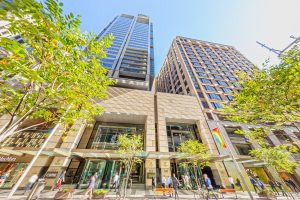
CAF Portfolio Certification provides asset owners with a practical, credible way to benchmark their supply chains, engage directly with workers, and drive year-on-year improvement at scale.
In Australia’s property industry, early leadership deserves applause. In 2024, ISPT achieved the first CAF GOLD Portfolio Rating and Cbus Property certified all eligible properties. These examples are signals of a market that is beginning to lift its ambition.
They’re also examples of leadership that starts at the top. In these organisations, addressing modern slavery is not left to individual building managers juggling budgets and tenant demands. It is backed by centralised, executive-level commitments that ensure that CAF Certification – like Green Star or NABERS – is consistently resourced and rolled out.
Stories that change the system
In December 2024, the Albanese Government published its response to the statutory review of the Modern Slavery Act. The government agreed in principle to a range of recommendations, including penalties for non-compliance. 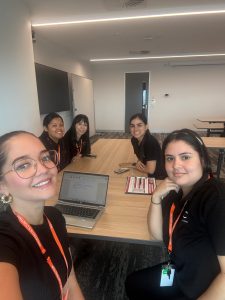
Its re-election in a landslide victory gives the Albanese Government a clear mandate to strengthen the Commonwealth’s commitment to abolishing modern slavery, by addressing risk in its own procurement practices, and providing a stronger regulatory hook for the private sector through the implementation of mandatory human rights due diligence.
But real leadership doesn’t wait for regulatory reform. It helps to set the standard. Just like leadership in Green Star and NABERS, taken by property leaders when it wasn’t easy, leadership with CAF will be measured by the willingness to act — even when it is hard and even when it uncovers uncomfortable truths.
Cleaners need a voice. CAF helps them be heard. And the business benefits are clear. As CAF’s Worker Engagement Officer Jennifer Alonso, herself a former cleaner, outlined at the launch of CAF Portfolio Certification: “A clean environment reduces the risk of illness and absenteeism, which improves employee productivity… the cleanliness of a building or shopping centre directly reflects the owner’s brand image, conveying a message of professionalism, care and attention to detail. These spaces function well because of cleaners.”
The next chapter of leadership in property will be written by those working together to lift standards and protect the people behind our buildings.
If you’d like to learn more, talk to us. The CAF team is here to help.